Financial inclusion means that households and businesses have access and can effectively use appropriate financial services. Such services must be provided responsibly and sustainably, in a well regulated environment.
An increasing body of evidence shows that appropriate financial services can help improve household welfare and spur small enterprise activity. There is also macroeconomic evidence to show that economies with deeper financial intermediation tend to grow faster and reduce income inequality.
And yet World Bank research shows that an estimated 2.5 billion working-age adults globally– more than half of the total adult population–have no access to the types of formal financial services delivered by regulated financial institutions wealthier people rely on. Instead they depend on informal mechanisms for saving and protecting themselves against risk. They buy livestock as a form of savings, they pawn jewelry, and they turn to the moneylender for credit. These mechanisms are risky and often expensive.
1. Learning from the microcredit revolution
The microcredit revolution showed that poor families in the informal economy are valuable clients, and that it is possible to serve them in large numbers sustainably. Today, the $70 billion micro-credit industry that grew from these innovations with its estimated 200 million clients remains a great success of sustainable non-government and private sector growth catalyzed by highly-targeted public subsidies.
But over the past few decades we have also learned that poor households need access to the full range of financial services to generate income, build assets, smooth consumption, and manage risks--financial services that a more limited microcredit model cannot provide.
The global financial inclusion agenda recognizes these broader needs. It also recognizes the importance of financial literacy, building consumer financial capabilities, and for consumer protection regimes that take the conditions and constraints of poor families in the informal economy into account.
2. Capturing the benefits of business model innovations
The microcredit revolution found an ingenious way to provide credit to the poor without collateral: using the joint-liability loan that replaced physical collateral with social collateral to allow the poor to pledge for one another. But the business model challenge for other financial services is different. For small denomination savings and remittances the key challenge is the need for ultra-low transaction costs; for insurance, risks must be pooled and managed at actuarially-relevant scale.
We need continued product and business model innovation so that we can reach more people with a broader range of products at lower costs. Such innovation is already happening, for example leveraging mobile-phone based business models. But ultimately no single type of provider will be able to overcome the very different product-specific business model challenges. What is needed instead is a variety of financial service providers that create an ecosystem that serves the poor profitably.
3. Creating the enabling environment
Responsible market development needs a regulatory environment that balances the needs of advancing access to finance and stability of the financial system. Globally, policy makers are recognizing that financial exclusion is a risk to political stability that impedes economic advancement. The global financial Standard Setting Bodies are changing their guidance to respond to this need to facilitate financial inclusion. And the G20 has recognized financial inclusion as an important policy priority.
Under G20 leadership, a powerful responsible financial market development vision is emerging – a vision that essentially aims at banking the other half of the global working-age adult population.
The term "microfinance," once associated almost exclusively with small-value loans to the poor, is now increasingly used to refer to a broad array of products (including payments, savings, and insurance) tailored to meet the particular needs of low-income individuals. People living in poverty, like everyone else, need a diverse range of financial services to run their businesses, build assets, smooth consumption, and manage risks.
Poor people usually address their need for financial services through a variety of financial relationships, mostly informal. Credit is available from informal moneylenders, but usually at a very high cost to borrowers. Savings services are available through a variety of informal relationships like savings clubs, rotating savings and credit associations, and other mutual savings societies. But these tend to be erratic and somewhat insecure. Traditionally, banks have not considered poor people to be a viable market.
Different types of financial services providers for poor people have emerged - non-government organizations (NGOs); cooperatives; community-based development institutions like self-help groups and credit unions; commercial and state banks; insurance and credit card companies; telecommunications and wire services; post offices; and other points of sale - offering new possibilities.
These providers have increased their product offerings and improved their methodologies and services over time, as poor people proved their ability to repay loans, and their desire to save. In many institutions, there are multiple loan products providing working capital for small businesses, larger loans for durable goods, loans for children’s education and to cover emergencies. Safe, secure deposit services have been particularly well received by poor clients, but in some countries NGO microfinance institutions are not permitted to collect deposits.
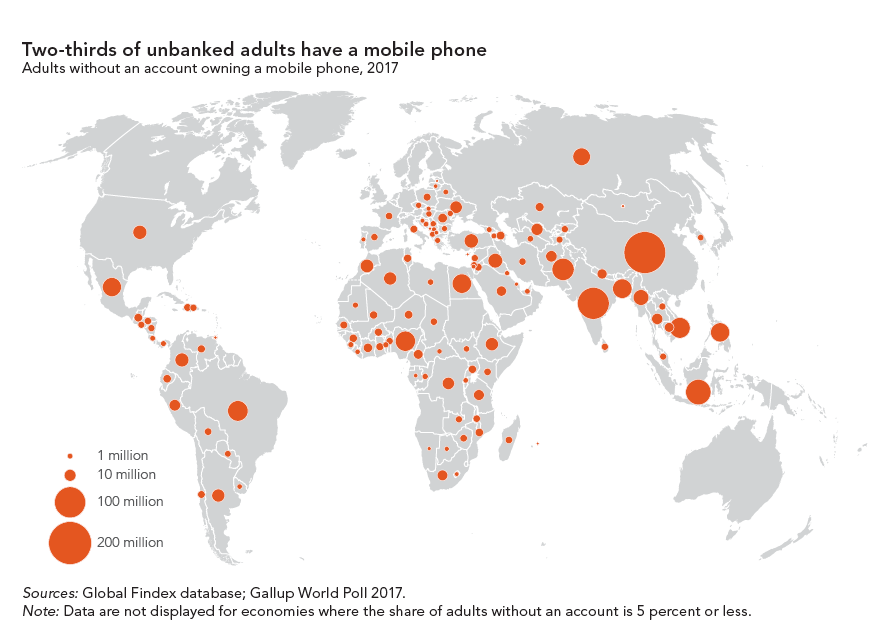
Remittances and money transfers are used by many poor people as a safe way to send money home. Banking through mobile phones (mobile banking) makes financial services even more convenient, and safer, and enables greater outreach to more people living in isolated areas.
A growing body of empirical evidence shows that access to the right financial service at the right time helps households build assets, generate income, smooth consumption, and protect themselves from risks. At the policy level, decision-makers have recognized that an inclusive financial system that reaches all citizens also allows for more effective and efficient execution of other social policies, for example through conditional payment transfers in health and education. And at the macro level, we know that deeper financial intermediation in an economy leads to more growth, and less inequality.
Financial inclusion today is about financial markets that serve more people with more products at lower cost. The term “microfinance,” once associated almost exclusively with small-value loans to the poor,is now increasingly used to refer to a broad array of products (including payments, savings, and insurance) tailored to meet the particular needs of low-income individuals. Two separate but related developments have spurred this more holistic approach to financial inclusion. First, a growing body of research is demonstrating that poor people use and need a wide array of financial products, not just credit. Second, innovative lower cost business models—especially electronic and agent banking models—hold the promise of reaching unbanked populations with a fuller range of products better suited to their needs. Different products present different risks and delivery challenges, and it is unlikely that a single class of service providers will effectively provide all the products poor people need. A key challenge is how to create the broader interconnected ecosystem of market actors and infrastructure needed for safe and efficient product delivery to the poor. And many are asking what roles a government can or should play in the development of these financially inclusive ecosystems, especially in light of innovation in financial services delivery.
The story of microfinance is, for most people, synonymous with microcredit. The archetypal credit constrained microentrepreneur has a business where lack of funds is the major blockage to growth and increased revenue. But how many of today’s estimated 190 million active microcredit borrowers fit the profile of the archetypal microentrepreneur (Reed 2011)?
Evidence shows many borrowers come with a different set of characteristics: their business may not be able to use much capital, or even more commonly, they use the loan proceeds for consumption or to meet unexpected expenses. The world’s 1.6 billion working poor people fall into many segments with diverse needs. One study estimates that just over 10 percent are classic microentrepreneurs (Wyman 2008). Farmers and day laborers are more numerous, and their financial lives are different from that of microentrepreneurs.
Farmers see vast swings in their income from season to season. Day laborers might see smoother income across the year, but on any given day they may not know if they will work. To point out one obvious difference, farmers need mechanisms to move money across many months; day laborers need much shorter term instruments. The typical microcredit loan—over 90 days with repayment beginning immediately—may not be appropriate for either. Clearly, a wide range of financial products is needed to meet the needs of the different segments of the poor. Most of the progress so far has been limited to microcredit for two reasons. First, the lending business can be profitable even at very small scale. Upfront investment requirements are small, so barriers to entry are low. This is not the case with, say, insurance. The only way insurance can work is to have a large and diverse pool of customers, containing old and young, healthy and ill, people who experience fires and those who do not, and generally presenting a predictable manageable stream of costs to the provider.
Microfinance clients are often described according to their poverty level - vulnerable non-poor, upper poor, poor, very poor. This can obscure the fact that microfinance clients are a diverse group of people – and require diverse products. While women clients make up a majority of clients - and in some instances comprise 100 percent of an MFI’s clientele, 33 percent of all microfinance clients are men. There is also a vast difference according to regions. For example, in South Asia MFI clients are almost 100% women where as in Europe and Central Asia women comprise of 50% all clients. You can read the CGAP blog series on Global FINDEX data, or go to the Global FINDEX data website for more information.
These clients operate small businesses, work on small farms, or work for themselves or others in a variety of businesses – fishing, carpentry, vegetable selling, small shops, transportation, and much more. Some of these microfinance clients are truly entrepreneurs – they enjoy creating and running their own businesses. Others become entrepreneurs by necessity when there are few jobs available in the formal sector.
Recently, microfinance institutions have begun using poverty assessment tools to more accurately measure the number of their clients who are living on less than $1 a day. Serving the very poor and the destitute – those who lack shelter, income, or even sufficient food – is more challenging, and may require ongoing subsidy. Innovative schemes, such as the BRAC Ultra-Poor Program, have opened up pathways to economic activity and access to financial services for the extreme poor. CGAP has launched 10 pilots in eight countries (Ethiopia, Ghana, Haiti, Honduras, India, Pakistan, Peru, and Yemen) that are modeled on the successful BRAC program.
This program targets destitute clients through a carefully sequenced combination of livelihoods grants and microfinance, with savings playing a critical role, so that clients ‘graduate’ out of poverty. Each pilot is accompanied by a rigorous impact study, and qualitative studies to measure progress. Early results are quite promising, and the program is contributing important lessons for serving very poor clients in different cultures and contexts.
The dominant impact narrative for microcredit rests on loans to capital-constrained microentrepreneurs who earn a steep return on marginal capital and thus can repay a relatively high interest rate and reinvest to grow out of poverty. Access to credit for this segment remains an important development tool. But not every borrower is a microentrepreneur, and poor households clearly have other financial services needs beyond credit.
To assess the impact of access to financial services, the key questions are, therefore, what are the underlying financial services needs of clients, and what impact is achieved when the appropriate financial instrument is used?
Several researchers are studying the various new ways access to financial services might positively impact poor households’ welfare, leveraging insights from the field of behavioral economics. In parallel, a new body of empirical evidence is emerging using methodologies similar to medical trials where access to specific new services is randomly assigned, and the impact of a change in access on one customer group is compared to a second group without that same access. Such randomized controlled trials need a certain sample size and timeframe to be meaningful, and only a handful has been completed to date in access to finance.
Across various financial services, here are some of the highlights of this new thinking and the new evidence from randomized controlled trials.
Credit. Beyond providing working capital loans to microentrepreneurs, borrowing money can help households manage cash flow spikes and smooth consumption. Cutting-edge behavioral research also suggests that the mere peace of mind associated with the knowledge that credit is available can help households make better decisions that improve welfare in the long run. New empirical impact studies have shown positive effects on the income of existing microbusinesses (in India and the Philippines), diversification of livestock (in Morocco), and reduction in the spending on temptation goods, such as tobacco (in India and Morocco). These studies, which had one- to two-year time horizons, however, did not find evidence for a direct effect of higher spending on health or education relative to the control group.
Savings. Accumulating savings also helps households manage cash flow spikes. Researchers think that saving small amounts at home is difficult for poor households given multiple, immediate demands of various household members. When mechanisms for high-frequency, low-balance deposit services are available, results could be strong. A recent randomized controlled impact study found that access to a new savings service to women in Kenya enabled them to mitigate the effect of health shocks, increase food expenditure for the family, and increase microbusiness investments by 40% relative to the control group.
Insurance. Insurance helps poor households mitigate risk and manage shocks. By definition, insurance seeks to broaden and diversify risk pools and is hence inherently inclusive. Challenges so far have been to find mechanisms that are helpful to poor households, yet manageable from an actuarial and operational insurance perspective. A recent randomized controlled study of weather-based index insurance showed strong positive impact on farmers as the assurance of better returns encouraged them to substitute away from subsistence to crash crops (in India and Ghana). In Ghana, insured farmers bought more fertilizers, planted more acreage, hired more labor, and had higher yields and income, which led to fewer missed meals and fewer missed school days for the children.
Financial inclusion is an issue of growing importance to policymakers due to its potential to contribute to key development objectives such as economic growth and increased welfare. At the same time, the global financial crisis has highlighted the need for responsible delivery of financial services. In late 2008 and 2009, as the G20 moved decisively to assume the role of chief shaper of the international financial architecture, these two closely tied policy priorities – financial inclusion and responsible finance – began to emerge as increasingly important for the powerful global body.
At their Pittsburgh Summit in September of 2009, the G20 Leaders issued their first pronouncement on financial inclusion and committed to improving financial services for the poor. In June 2010 the Leaders endorsed nine high level Principles for Innovative Financial Inclusion at the Toronto G20 Summit. The Principles lie at the heart of the multi-year Financial Inclusion Action Plan approved by the Leaders at the Seoul Summit in November 2010. The G20 Leaders confirmed their commitment to financial inclusion by approving a Financial Inclusion Action Plan, and creating a new body in late 2010 to implement it: the G20 Global Partnership for Financial Inclusion (GPFI). CGAP is one of four key implementing partners for the GPFI, along with the Alliance for Financial Inclusion (AFI), International Finance Corporation (IFC), and the World Bank. The GPFI functions as an inclusive platform for G20 countries, non-G20 countries, and relevant stakeholders for peer learning, knowledge sharing, policy advocacy and coordination.
The GPFI carries out its work through Sub-groups, each chaired by up to three G20 countries, under the overall direction of the G20 “troika” (the current G20 President, as well as the immediate past and future Presidents – currently France, Mexico, and Russia). CGAP and the other GPFI Implementing Partners (currently AFI, IFC and the World Bank) staff the work of the Sub-groups.
There are three GPFI Sub-groups and a fourth in formation:
1) Sub-group on Principles and Standard-Setting Bodies Engagement
2) Sub-group on SME Finance
3) Sub-group on Financial Inclusion Data and Measurement
4) Efforts are underway to establish a fourth Sub-group – on consumer protection and financial literacy – which will support the work of the other Subgroups on these vitally important topics.
For further information, please visit www.gpfi.org
Over the past two decades, institutions that make microloans to low-income borrowers in developing and transition economies have focused increasingly on making their operations financially sustainable by charging interest rates that are high enough to cover all their costs. They argue that this policy will best insure the permanence and expansion of the services they provide. Sustainable (i.e., profitable) microfinance providers can continue to serve their clients without needing ongoing infusions of subsidies, and can fund exponential growth of services for new clients by tapping commercial sources such as deposits from the public.
The problem is that the administrative costs are inevitably higher for tiny microlending than for normal bank lending. Lending out a million dollars in 100,000 loans of $100 each will obviously require a lot more in staff salaries than making a single loan for the total amount. As a result, interest rates in sustainable microfinance institutions (MFIs) are substantially higher than the rates charged on normal bank loans.
There are three kinds of costs the MFI has to cover when it makes microloans. The first two, the cost of the money that it lends and the cost of loan defaults, are proportional to the amount lent. For instance, if the cost paid by the MFI for the money it lends is 10 percent, and it experiences defaults of 1 percent of the amount lent, then these two costs will total $11 for a loan of $100, and $55 for a loan of $500. An interest rate of 11percent of the loan amount thus covers both these costs for either loan.
The third type of cost, transaction costs, is not proportional to the amount lent. The transaction cost of the $500 loan is not much different from the transaction cost of the $100 loan. Both loans require roughly the same amount of staff time for meeting with the borrower to appraise the loan, processing the loan disbursement and repayments, and follow-up monitoring. Suppose that the transaction cost is $25 per loan and that the loans are for one year. To break even on the $500 loan, the MFI would need to collect interest of $50 + 5 + $25 = $80, which represents an annual interest rate of 16 percent. To break even on the $100 loan, the MFI would need to collect interest of $10 + 1 + $25 = $36, which is an interest rate of 36 percent.
MFIs have to charge rates that are higher than normal banking rates to cover their costs and keep the service available. But even these rates are far below what poor people routinely pay to village money-lenders and other informal sources, whose percentage interest rates routinely rise into the hundreds and even the thousands.
This does not mean that all high interest charges by MFIs are justifiable. Sometimes MFIs are not aggressive enough in containing transaction costs. The result is that they pass on unnecessarily high transaction costs to their borrowers. Sustainability should be pursued by cutting costs as much as possible, not just by raising interest rates to whatever the market will bear.
Interest rates, while still too high in some places, are dropping on average 2.3 percent a year. The microfinance industry has placed a lot of emphasis on improving efficiency in order to bring down these costs, so that poor clients are not paying unnecessarily high rates. New technology also offers to help reduce costs, so we expect rates to continue dropping as institutions become increasingly efficient at delivering services to poor people.
CGAP research found:
- MFI interest rates averaged about 28 percent in 2006, declining by 2.3 percent a year since 2003.
- MFI rates are lower than consumer and credit card rates in most countries, and usually far lower than rates charged by informal moneylenders.
- At an average 12.7 percent of portfolio in 2006, operating costs are the largest single contributor to interest rates, declining by one percentage point per year since 2003.
- MFIs on average have higher returns on assets than commercial banks, but produce lower returns on equity for their investors. At the same time, the most profitable 10 percent of MFIs were producing returns on equity above 34 percent in 2006. Some of these profits are captured in private pockets.
Here are some resources for best practice guidelines:
1. Good practice guidelines for funders of microfinance (the Pink Book): The second edition was released in October 2006. This was the first of its kind in the microfinance industry and condensed thirty years of lessons learned, translated into operational advice for development agencies, foundations, social and commercial investors, international NGOs, and others that help build financial systems that work for poor people.
2. SmartAid Index: SmartAid measures whether funding agencies are set up to support microfinance effectively. Its premise is that organizations that have a clear strategy and staff with relevant expertise are transparent and accountable, share knowledge, and use appropriate funding instruments are better equipped to support microfinance. As such, the Index focuses on what funders can influence most directly—their internal management systems.
3. Implementing Client Protection Principles – Technical Guide for Investors: As the microfinance sector has come under more intense scrutiny than ever before, responsible finance initiatives have picked up steam. Hundreds of organizations across the industry (providers, associations, funders, etc.) have come together in the Smart Campaign, endorsing six core Client Protection Principles for microfinance and committing to implement specific improvements in products, practices, and policies. As of November 2010, more than 100 investment organizations have endorsed the Principles and are taking concrete actions to encourage providers to adopt appropriate client protection policies and practices.
4. Agent Management Toolkit: This guide presents practical advice to providers on how to build a viable network of agents, which is a critical component of a branchless banking service.
5. Information Systems Technical Guide: Financial institutions depend on their ability to process large quantities of information in a timely and accurate manner. For smaller institutions, such as microfinance institutions (MFIs), establishing and managing systems to process information is especially difficult to do. Scarce skilled human capital, limited funds, and a lack of formal, documented, and enforced processes—the building blocks of back office systems—add to the challenge. Getting it right is critical, but it is not easy to do. The Guide is organized based on a four-step process aimed at procuring a new technology solution: project preparation, needs analysis, selection, and implementation. At the beginning of each section, a figure indicates which tool(s) accompany that section, the activities the institution should undertake, and the key considerations.
Microfinance, or financial services for the poor, can be profitable. However, data collected by the Microfinance Information Exchange (MIX) shows a quite different picture of the profit orientation of microfinance. High-yield, high-return MFIs that have drawn the most public ire are outliers. In fact, this small group of MFIs serves less than 10 percent of clients worldwide. The vast majority of clients borrow from MFIs that charge less than 30 percent and realize less than 30 percent return on equity - indeed, most are served by MFIs that earn less than 15 percent return on equity.
Should for-profit MFIs take the blame for excesses seen in the market? Surprisingly, facts provide little evidence that profit orientation is the real problem. Returns on assets have historically been higher for non-profit institutions than for-profit, although both groups have shown lower profits year-on-year and are essentially indistinguishable at this point on other metrics. For-profit MFIs also don’t generally charge their clients more than non-profit MFIs, and both yields and expenses have declined over time (albeit slowly). The facts belie easy assumptions: for-profit does not mean more profitable; and non-profit does not mean low cost.
The data does not support a view that more than a small group of MFIs can be accused of extracting excessive profits through exploitative interest rates. Even then, further analysis is needed to determine how these profits are distributed.
There are cases where microfinance cannot be made profitable, for example, where potential clients are extremely poor and risk-averse or live in remote areas with very low population density. In such settings, microfinance may require continuing subsidies. Whether microfinance is the best use of these subsidies will depend on evidence about its impact on the lives of these clients and the mix of services.
Poor people save because they must. Their income is rarely sufficient to manage crises (a sudden illness or a flood, for example), to invest when an opportunity appears, or to pay for large expected expenses, such as school fees, a wedding, or a new roof.
Poor people save mostly in informal ways. They invest in assets such as gold, jewelry, domestic animals, building materials, and things that can be easily exchanged for cash. They also participate in informal savings groups.
Most poor people lack access to safe, formal deposit services. Institutions that mobilize deposits like banks, credit unions, and postal savings banks are often too far away, or the time and procedures needed to complete transactions are too onerous. Institutions may also impose minimum transaction sizes and/or require depositors to retain a minimum balance, both of which can exclude the poor. Operating hours may not be convenient for poor depositors, nor are they welcome as clients.
Low-income savers tend to care most about accessibility and security of their savings. Accessibility can be seen as physical accessibility (proximity) and financial accessibility (affordability). Clients value both highly liquid accounts that allow for frequent small transactions, and time-bound accounts that allow people to save for specific objectives. Other priorities include convenient locations and operating hours, flexible products, helpful and friendly staff, confidentiality, and a decent return (although this last feature is less important to the smallest depositors).
Two of the biggest obstacles to serving low-income depositors are distance and product terms. To provide convenient, useful services to poor savers and remain financially viable, most institutions must employ alternative forms of staffing and delivery channels.
Donors can powerfully help – or hinder – savings operations. Donors often provide disincentives for financial institutions to mobilize deposits by offering soft loans. However, donors can help develop sound savings operations by helping to strengthen regulation and supervision and improving regulators’ understanding of microfinance issues. Donors can also provide technical assistance grants, support visits to successful deposit institutions and fund savings-focused market research. Finally donors can support a range of institutional types and delivery channels to extend services to poor and rural markets and invest in physical or technological infrastructure to jumpstart savings mobilization in rural areas.
Before developing savings operations institutions should have the legal authority to mobilize deposits, effective governance, financially sustainable operations and a sound business plan showing continued viability and indicating where savings can be invested profitably. Institutions should also have sufficient internal controls and the technical capacity to manage liquidity and interest rate risks. The physical infrastructure—in a safe and convenient location—and a strong management information system are also required.
While many poor people can benefit from a microloan, not everyone wants or can use credit. To use credit effectively, clients must be able to generate income at a rate higher than the interest they are paying. Providing credit to those not able to use it productively could push already-vulnerable people into debt.
Savings services can benefit most people, if their savings are safe. Secure savings facilities provide a means to reduce vulnerability by allowing households to better manage their risk and cash flow. Savings are an affordable way for poor families to accumulate money that can be used for investment. Often, microfinance institutions may first need to transition to a regulated legal form in order to be allowed to offer deposits to the public.
Other financial services, such as remittances, insurance and pensions, are often sorely needed by poor people. For example, remittances are a significant source of income for many poor people. Enabling cheaper, faster money transfer services would be a great benefit for many poor families who currently spend significant percentages of their earnings to move money. Moreover, many families could utilize insurance products and better pension delivery systems for greater social protection.
Safety-nets are transfer programs targeted to the poor or those vulnerable to poverty and shocks. Some people refer to such programs described as social assistance or social welfare programs. They can provide relief to people hit by crises or who are chronically poor. Displaced persons during or immediately following a conflict or those affected by natural disasters, such as earthquakes, famines and floods, are likely suited for targeted "safety-net" assistance that enables them to meet immediate consumption needs and replace lost assets.
Grants can be used to help people build assets, develop enterprises, and combat chronic poverty. Grants may be suitable for post-crisis situations, as well as for assisting the chronically poor, retrenched workers, and high-risk groups with little work experience.
Conditional cash transfers are a popular way to structure grants. Beneficiaries receive cash or some grant in exchange for important behaviors such as school enrollment/attendance or utilizing health services. Small grants can also work well as first steps to "graduate" the poor from vulnerability to economic self-sufficiency. A successful example is BRAC’s Income Generation for Vulnerable Groups Development program in Bangladesh. This program has graduated more than 660,000 destitute women through free food, training, health care, and savings to mainstream microfinance.
Investments in infrastructure, such as roads, communications, and education, provide a foundation for economic activities. Community-level investments in commercial or productive infrastructure (such as market centers or small-scale irrigation schemes) can facilitate business activity.
Employment programs prepare the poor for employment and can promote income generation. Food-for-work programs and public works projects allow poor people to be functionally employed while contributing to improvement in infrastructure. In many cases, these programs may be out of reach for cash-strapped local governments but within the purview of large donors.
Non-financial services range from literacy classes and community development to market-based business-development services. While non-financial services should usually be provided by separate institutional providers, there are clear, complementary links with the potential impact of microcredit. For example, improved access to market opportunities can lead to more profitable, faster growth enterprises.
Legal and institutional reforms can create incentives for microfinance by improving the operating environment for both microfinance providers and their clients. For example, streamlining microenterprise registration, abolishing caps on interest rates, strengthening customer protection, loosening regulations governing non-mortgage collateral, strengthening the judicial system, and reducing the cost and time of property and asset registration can foster a supportive climate for microfinance.
Banks are prudentially regulated and supervised to protect their depositors and to prevent risks to the financial system. Credit-only MFIs that do not take voluntary savings from the public pose little risk to the financial system, if any, and can generally be handled with less intensive non-prudential regulation. Non-prudential regulation addresses such topics as consumer disclosure and recourse or anti-money laundering and combating financing of terrorism (AML/CFT) that do not depend on the financial health of the regulated provider. Prudential regulation and supervision, which do aim to protect the solvency of license holders, are appropriate for most MFIs that take voluntary deposits—for instance, savings-based financial cooperatives or credit-only MFIs that want to start attracting savings to finance their growth. A proportionate approach to prudential regulation and supervision calls for different categories of deposit-taking institution to receive differing levels and types of prudential supervision, based on the nature, scale and complexity of their activities.
In many countries, various stakeholders push for new laws or regulations creating a specialized type of financial license for deposit-taking MFIs. Such laws and regulations need to be approached with care. New licensing windows for MFIs have been most successful in countries where a critical mass of profitable credit-only MFIs existed before the opening of the window, or where there was appetite for so-called ‘greenfield’ investment: where a licensed deposit-taking MFI is started from scratch, importing experienced management from other countries. On the other hand, in some countries, providers who aren’t the intended beneficiaries of these windows see an opportunity for regulatory arbitrage in the new window.
Proponents of new legislation or regulation often fail to give enough attention to the practical feasibility and cost of supervising the new institutions created. In Indonesia, Ghana, and the Philippines, for example, floods of small, often remote and hard-to-supervise institutions were licensed immediately following the opening of a new regulatory window, precipitating a supervisory crisis and the failure of large numbers of institutions. A similar challenge arises when dealing with community-based financial intermediaries that are too small or too remote for effective prudential regulation and supervision. An argument can be made that these should be permitted to exist if they disclose clearly that they are not regulated and supervised, especially in those areas where poor customers have few, if any, other financial service options.
Although MFIs that do not take voluntary deposits do not need prudential regulation and supervision, they are likely to need to meet certain minimum regulatory conditions as lenders, depending on the country, and should be held to the same standards of market conduct as other providers of similar services. In a significant number of jurisdictions, and particularly in transition countries, legislation is sometimes necessary to clarify the legal authority of NGOs and other non-bank institutions to engage in the business of lending without a banking license. In some countries where a regulatory status for nonbank microlending has been newly established, money lenders and other profit-maximizing providers without any social performance objectives have registered as microlenders, tarnishing the reputation of the sector with the public and policy makers.
A growing body of research suggests that whether broad-based access to formal financial services promotes financial stability depends on how that access is managed within the regulatory and supervisory framework, especially in terms of financial integrity and consumer protection. Four factors come into play: financial inclusion, financial consumer protection, financial integrity, and financial stability. These factors are inter-related and under the right conditions, positively related. Yet failings on one dimension are likely to lead to problems on others.
Multiple studies have documented a robust negative relationship at the country level between indicators of financial depth and the level of income inequality as measured by the Gini coefficient. Financial depth is also associated with increases in the income share of the lowest income quintile across countries from 1960 to 2005 (Beck,Demirgüç-Kunt, and Levine 2007). It comes as little surprise, therefore, that countries with higher levels of financial development also experienced swifter reductions in the share of the population living on less than $1 per day in the 1980s and 1990s. The magnitude of the impact is also large. Controlling for other relevant variables, almost 30 percent of the variation across countries in rates of poverty reduction can be attributed to cross-country variation in financial development (Beck, Demirgüç- Kunt, and Levine 2007).
The benefits work not only through direct use of financial services, but through the indirect positive effects that financial development has on low income population segments, especially through labor markets. For example, careful empirical studies have shown that the deregulation of bank branching can not only intensify competition and improve bank performance, it can also boost the incomes of the poor, tightening income distribution by increasing relative wage rates and working hours of unskilled workers.
Financial inclusion today is about financial markets that serve more people with more products at lower cost. Developing such markets requires an ecosystem of different providers because different products present different risks and delivery challenges -- and it is unlikely that a single class of service providers will effectively provide all the products poor people need.
As governments become more actively involved in the financial inclusion agenda, a key challenge is defining roles for government in creating the market-based broader and interconnected ecosystem of market actors needed for safe and efficient product delivery to the poor. CGAP has identified three roles that have the potential for significant impact:
Promoter of front- and back-end infrastructure: Existing banking infrastructure does not adequately reach the world’s poor. Bank branches are too expensive to construct in low-income areas and, even when present, rarely offer affordable services. Automated teller machines (ATMs) and point-of-sale (POS) devices have wider penetration but have been of little use to unbanked customers without the cards and accounts typically needed to access such delivery channels. Poor borrowers are unlikely to possess the types of collateral typically pledged in collateral registries. Nor do poor borrowers borrow from the types of lenders served by most credit bureaus. And even where cost and distance are not barriers, access to formal financial services is often blocked by the lack of perhaps the most basic component of a financially inclusive infrastructure—a reliable means of customer identification (ID).
Rules maker with respect to infrastructure and its contribution to responsible market development: A government’s most obvious role—viewed by many as its primary role—is that of rule maker. As rule makers, governments determine not only what efforts may be undertaken to promote financial inclusion, but also by whom, how, and when. In addition to prudential and consumer protection rule making, this involves the potential to enable innovative financial inclusion business models, including permitting the entry of new actors into the financial service sector.
Driver of transaction volume: Driving transaction volume has the potential not only to bring more low-income individuals into the formal financial sector but also to lower the per-transaction cost of the retail/transaction infrastructure for various market actors. Perhaps the government’s most powerful tool to drive transaction volume is government-to-person (G2P) payments—the spectrum of social transfers, wages, and pension payments made by governments to 170 million poor people worldwide.
While each of these roles can have significant impact, the application of these roles in any given jurisdiction will depend on country-specific factors, such as customer demand, market structure and maturity, government philosophy toward the market, and supervisory and other governmental capacity.
At the country level, evidence suggests that financial inclusion can lead to greater efficiency of financial intermediation (e.g., via intermediation of greater amounts of domestic savings, leading to the strengthening of sound domestic savings and investment cycles and thereby greater stability). Multiple studies have documented a robust negative relationship at the country level between indicators of financial depth and the level of income inequality as measured by the Gini coefficient. Financial depth is also associated with increases in the income share of the lowest income quintile across countries from 1960 to 2005.* It comes as little surprise, therefore, that countries with higher levels of financial development also experienced swifter reductions in the share of the population living on less than $1 per day in the 1980s and 1990s.
The evidence suggests that underdeveloped financial systems have disproportionately negative effects on small firms and low-income households, which in turn is likely to have adverse effects on societal cohesion. Moreover, the Financial Action Task Force (FATF) has recently explicitly acknowledged financial exclusion as an important risk in its efforts to combat money-laundering and terrorist financing, underscoring the link between financial integrity and financial inclusion.
In countries with high levels of financial exclusion, the informal financial services that households (and small firms) must rely on can be poor substitutes for formal services.* In the extreme, informal services can themselves be a source of instability. For example, pyramid schemes organized as informal savings and investment opportunities have been known to trigger both political and social unrest and lack of confidence in the banking system.
Until recently, most of the relevant empirical research and evidence on links between financial inclusion and financial stability has come from research institutions, and not from policy makers, regulators, supervisors, or global standard-setting bodies (SSBs). Yet SSBs—and policy makers, regulators, and supervisors attempting to follow the SSBs’ standards and guidance while pursuing a financial inclusion agenda—are both among the most interested parties and also among the best positioned to contribute to articulating the research questions that will help SSBs consider financial inclusion in their work while remaining true to their core mandates. One example of such research going forward could be to explore the virtuous cycle linking financial inclusion, financial consumer protection, financial integrity and financial stability, with the goal to develop new policies that lead to greater financial inclusion coupled with stable financial market development.
For further information and background see: "Financial Inclusion and Stability: What Does Research Show?"
Responsible finance is the essence of the double bottom line in the provision of financial services: a social commitment to benefiting clients married with a financial commitment to operating profitably. Over time, the market should reward retail providers that adequately protect clients’ interests, affirmatively treat them well, offer a product line responsive to their needs, and deliver good value for money. In short, client-centered banking is a long-term sustainable business solution.
In January 2011, more than 40 microfinance investment organizations came together in a responsible investment initiative, launching the Principles for Investors in Inclusive Finance (PIIF) under the umbrella of the United Nations Principles for Responsible Investment (UNPRI). PIIF commits endorsers to fund responsible retail providers and try to create the right incentives for their investees to treat clients appropriately.
You can find more examples of initiatives around responsible finance, and a broader discussion of the issues in CGAP’s publication: “Responsible Finance: Putting Principles to Work”